
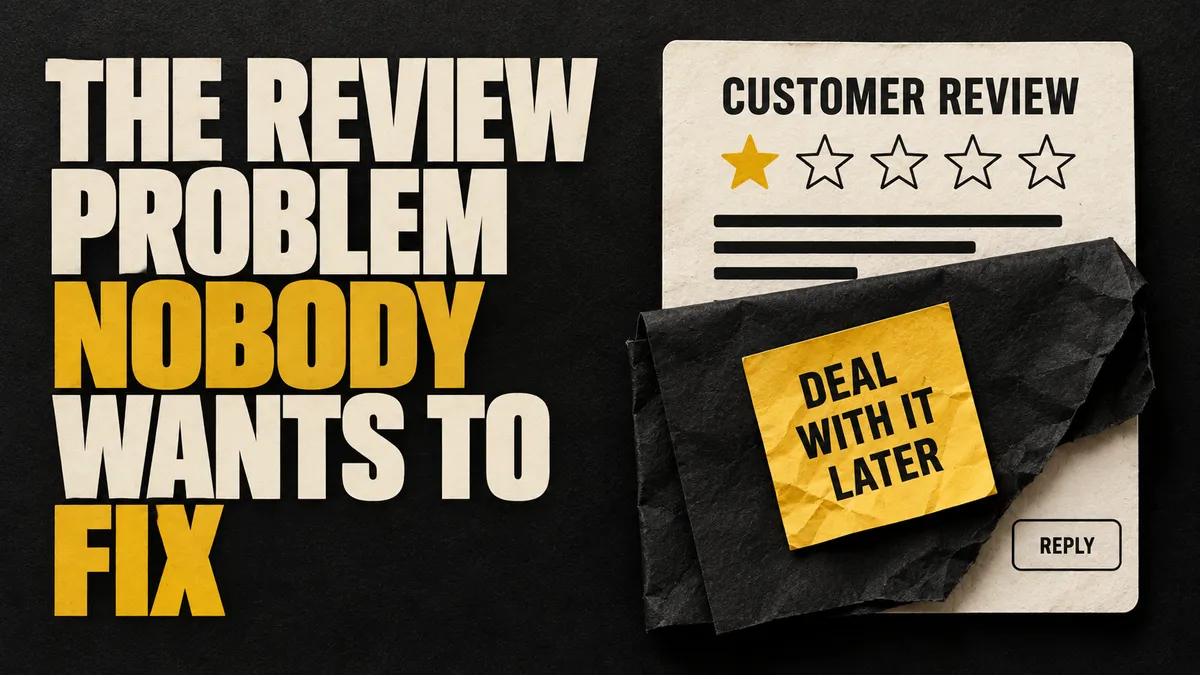
The review problem nobody wants to fix
Reviews decide more calls than your advertising does. Asking for them costs nothing. Most local businesses still have a handful from three years ago and no system for getting more.
The reason is not laziness. It is that asking feels awkward, and there is no deadline, so it never happens.
Why they matter more than the things you are paying for
Somebody finds you, through an ad or a search or a neighbor, and before they call they check. Rating first, then the two or three most recent, then the worst one.
That check happens between seeing your name and dialing, and it costs you nothing or everything. An excellent ad campaign delivering people to a profile with eleven reviews and a 3.8 average is an expensive way to send customers to your competitors.
The uncomfortable version: if you are spending money on advertising and your reviews are thin, you are funding the thing that makes people hesitate.
What actually matters in a review profile
Recency, more than volume. Forty reviews where the newest is from 2023 reads worse than twelve where the newest is from last week. People read the dates.
The worst one, and your reply. Everybody scrolls to the one star. What they are judging is not the complaint, it is how you responded. A measured, specific reply does more good than the review did harm. No reply at all is read as indifference.
Specificity. “Great service” tells a reader nothing. “Turned up when they said, fixed the leak in an hour, charged what they quoted” sells the job. You cannot write these, but you can ask in a way that prompts them.
A believable average. A perfect five across sixty reviews reads as suspicious to a lot of people. A 4.7 with a couple of mixed ones reads as real.
The system that actually works
Ask at the right moment. Immediately after the job is done and the customer is visibly happy. Not a week later by email, when the feeling has faded and the message is competing with everything else in their inbox.
Ask in person, then follow with a link. “Would you mind leaving us a review? I’ll text you the link.” The in person ask does the work. The text removes the friction.
Make it one tap. A direct link to the review form, not to your profile. Every extra step loses a share of people.
Ask everybody, not the ones you think will be kind. Cherry picking produces a profile that reads as curated, and it means you never hear the thing you need to fix.
Have one person responsible. The same failure as everything else in a small business. If it belongs to everybody it belongs to nobody.
What not to do
Do not offer anything in exchange. Discounts, entries into a draw, free work. It breaches the platform rules on Google and Trustpilot, and the downside of being caught is considerably worse than a slightly higher average.
Do not buy reviews. They are detectable, they get removed, and the profile is worse afterwards than before.
Do not filter. Gating, where you ask people how it went and only send the happy ones to the review link, is against the rules on most platforms and is obvious to anybody paying attention.
Do not argue in replies. You are not writing to the reviewer, who has made up their mind. You are writing to the next hundred people who will read it. Short, factual, no defensiveness.
The bad review you have been avoiding
Most businesses have one that stings. It is usually from somebody who was difficult, or where the facts were not as described, and it has never been replied to because every draft came out angry.
Reply to it. Keep it to three sentences. Acknowledge their experience, state the fact that matters, offer to resolve it offline. Do not relitigate.
An unanswered one star is a permanent liability. An answered one is evidence that you deal with problems, which is the thing people actually want to know.
Where this sits
This is free, it takes ten minutes a week, and it affects more purchase decisions than anything we could sell you.
If you came to us wanting to spend money on advertising and your reviews are thin and old, we would tell you to spend two months fixing that first. The ads will work better afterwards, and you will have spent nothing.
That is not an unusual situation. It is the most common reason we tell somebody not to start yet.